Optimizing warehouse and supply chain operations with digital twins
Unlock real-time insights and boost efficiency with digital twins for smarter warehouse and supply chain operations.



Bring developed a Control Tower that unifies the Transport Management Systems of their international business units. This provides better insights of the various transports.
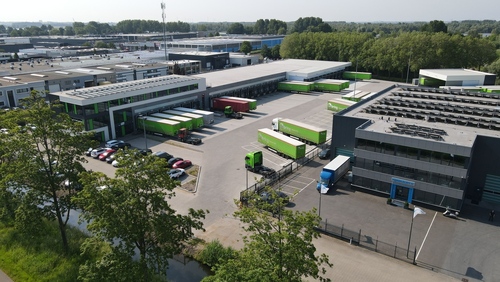
The Bring Group is one of the largest logistics service providers in Scandinavia and is part of the Norwegian Post. From the Dutch branch, services are offered to and from other European countries. The solution provides an overall view, overarching the underlying TMS systems of the various Bring locations. This creates insights into overall performance for customers.
The control tower is an essential application where all customer orders (via the customer portal) come in. Stability, scalability, and the processing speed of customer orders are critical success factors. The previous application, developed by another supplier, no longer met the requirements and wishes. Therefore, Bring decided to challenge several suppliers to prove themselves with a proof of concept. The ambitions for the software had also been adjusted upwards. The customer portal needed to grow into a fully-fledged control tower over time to gain new insights into transport activities. The value for Bring is a significant efficiency gain. And the added value for customers is found in a higher service level in the form of up-to-date information. This increases customer satisfaction.
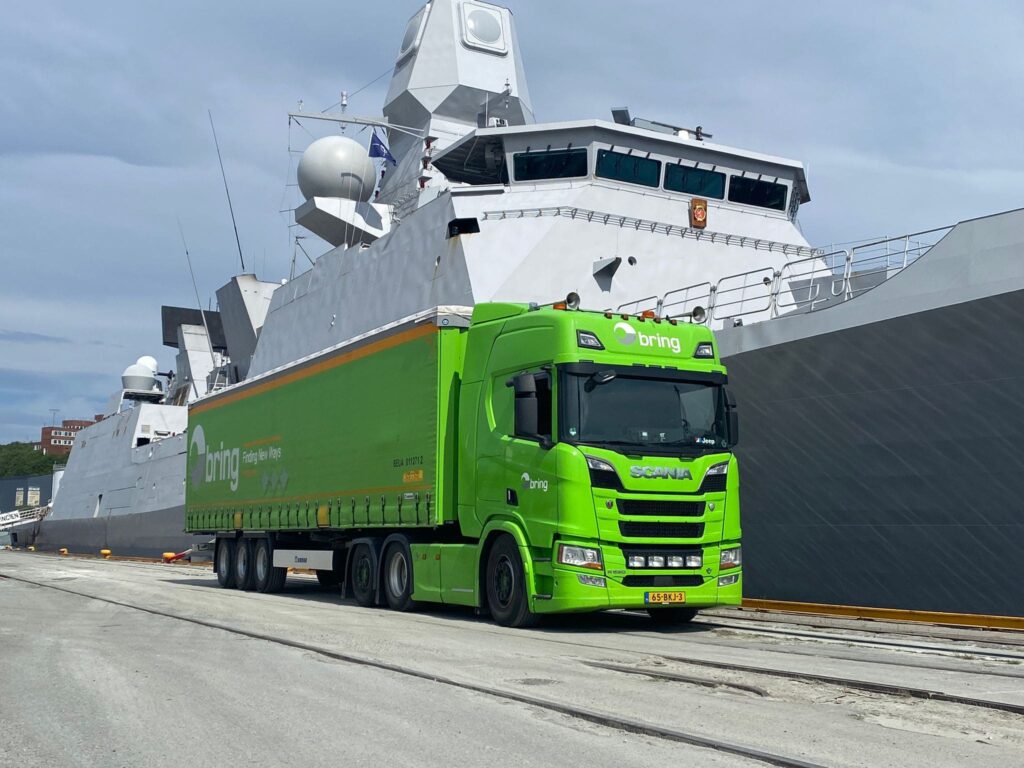
There were many problems with the old solution, which was running on a different low-code platform. Bring only wants tools for their employees that work quickly and efficiently. They are very satisfied with this now, as wait times between screens have disappeared.

The developer at Bring can work quickly and effectively thanks to the low-code technology. On the other hand, there is the flexibility to customize it completely. In this way, Bring developed a module themselves that allows customers to upload orders in Excel format into the customer portal. This saves a lot of manual retyping work and prevents input errors. This resulted in significant cost savings.
One of the conditions for growing into a fully-fledged control tower is the ease with which interfaces can be configured with the TMS systems of various Bring branches. These interfaces use a comprehensive information flow, based on XML files, which are now processed quickly and efficiently in the solution.
“The possibilities of the platform are very promising. USoft is going to play a major role within our international group.”
Marcel 't Hart
Sales Director at Bring
Customer expectations in the transport sector regarding digitization are increasing, and Bring is fully embracing this trend. For strategic reasons, Bring has deliberately chosen a hybrid team consisting of internal development, supported by a USoft partner. This enables Bring to directly translate business requests into solutions and accelerate development for future demands for larger functional expansions. The USoft low-code platform offers the flexibility to quickly develop solutions that precisely meet your requirements and are also very robust. This robustness was a significant challenge with the platform previously used by Bring.

The customer portal is developed in-house by their own USoft-certified developer. The advantage of a low-code platform is that it provides much more flexibility to implement customizations.
The USoft customer portal is linked to the TMS system that planners and sales employees use internally. The solution provides an overall view, overarching the underlying TMS systems of the various Bring locations. This helps to gain insight into the overall performance of the Bring Group for a customer.

By using the control tower, customers are further relieved of their burdens. Many customers have international shipments, requiring correct coordination between the different international Bring locations. In the new situation, the customer submits their order once, and the application ensures it reaches the right parties internally. Additionally, value is added for customers by providing them with more information, such as:













This year: saving of 2 FTE
Until 2030: saving of 5 FTE
These savings are achieved through increased efficiency.
With customer self-service in the portal, manual work is eliminated.

Bring achieves a time saving of 80% per shipment. The more information shared via the portal, the more customers will use it. Customers are essentially rewarded with extra information when they conduct business through the portal. When customers start using the platform, it not only saves manual input work but also time-consuming tasks such as answering numerous individual emails and phone calls.
Bring was able to transfer customers from two other customer portals to USoft and then deactivate the old portals. This allowed them to cancel two expensive licences, resulting in cost savings of €30,000 a year.

Beyond short-term results, this digital transformation is truly a strategic necessity to remain relevant in this competitive market. Consider that as an individual, you are now accustomed to track & trace information from shippers like DHL or PostNL. In international freight transport, this is still lagging behind due to the complexity of different systems and many different local carriers. However, customers expect this in B2B environments as well. If you don’t keep up with this trend, you won’t be relevant in a few years.
Unlock real-time insights and boost efficiency with digital twins for smarter warehouse and supply chain operations.
Gain a 360° view of your passengers to boost experience, efficiency, and revenue.

How low-code drives innovation and better outcomes in healthcare